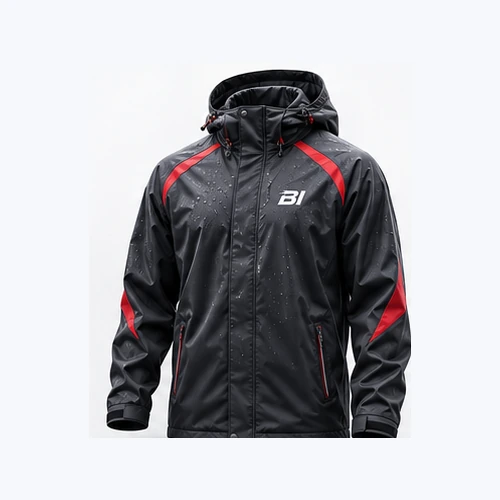
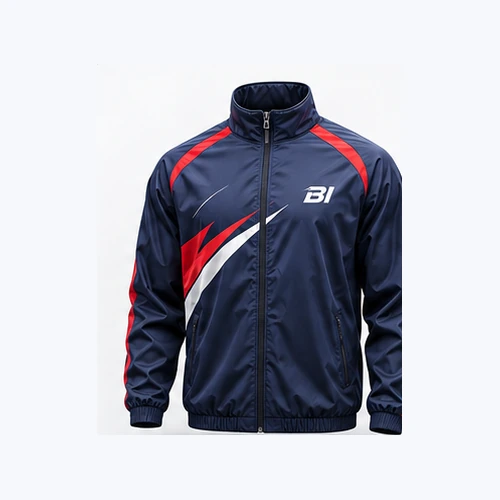
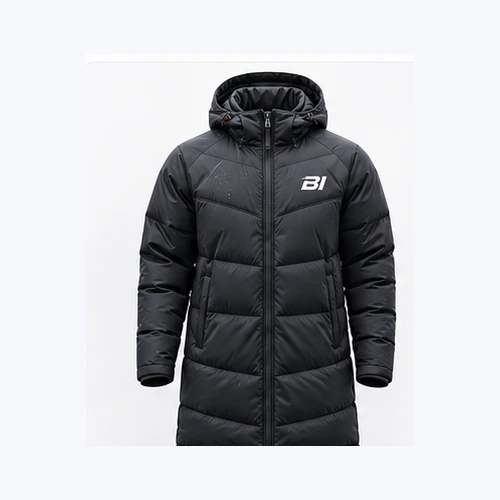
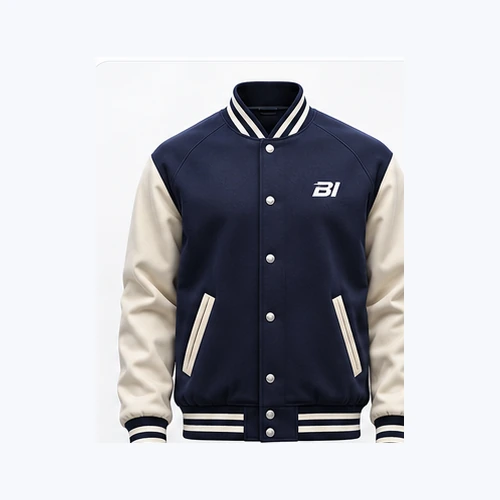
Identify jacket type and intended weather
Start with the staff use case: pre-game presentation, cool-weather coaching, sideline rain or general travel. Decide whether you need a light woven shell, a lined coat or a padded style. A silhouette sketch must show length, sleeves, collar or hood and preferred ease over training layers. Do not assume waterproof protection or insulation performance without suitable test data.
Specify shell, lining and construction
Ask for comparable material swatches and describe fabric finish, desired weight, breathability and colour. Define the type of front zip or snap closure, pocket locations, cuff finish, hem adjustment and inner lining if required. If a buyer requests water-repellent treatment, discuss the stated performance level and proof before using it as a marketing claim.
Position crest and sponsor embroidery
Place the club crest with reference measurements rather than a vague chest-position instruction. Large back embroidery or printing needs review of fabric compatibility, lining access and seam locations. Include sponsor variants and coach names on the artwork plan. The colour palette may match training tracksuits, but each textile should be checked separately for consistent appearance.
Plan staff rosters and repeat quantities
A coach jacket order usually contains smaller size runs than player uniforms. Record staff measurements, preferred fit and layer allowance in an accurate roster. Before a wholesale or private label production run, approve a sample showing all functional details. Written quotation, available materials, packing, lead time and minimum quantities should be agreed for the actual style.
Buyer approval checklist and specification control
For coach jackets, create a written specification that records the intended wearer or end user, approved measurements and grading rules, garment construction diagrams, material samples, colour references and branding artwork. State the quantities by size and colour and confirm whether the order needs individual names, labels or customised packing. Agree how the sample will be assessed for fit, movement, stitching, finish and wash-care details. Where required, request independent performance evidence for any functional claim before publishing it in a catalogue. Keep dated sample approvals and version numbers so revisions, additional teams and repeat wholesale orders can be compared against the same documented baseline.